


The Great Divergence
The Great Divergence: Why Your Paycheck Feels Smaller Than It Is
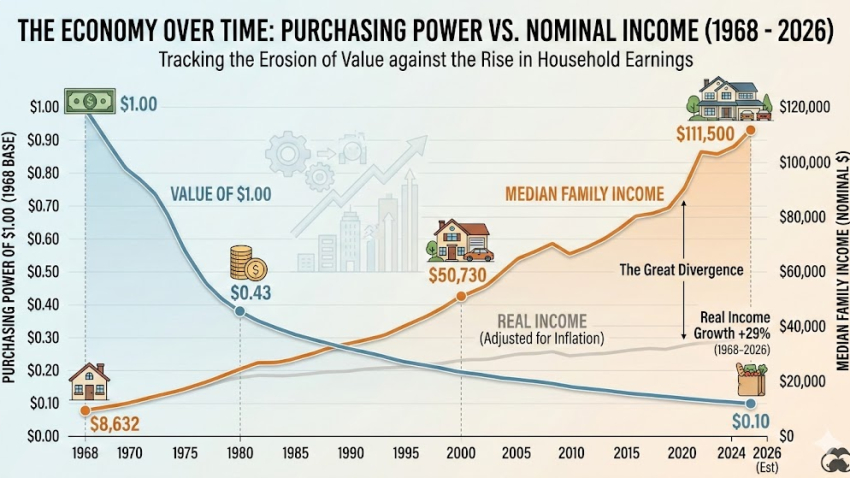
If you look at a bank statement from 1968 and compare it to one in 2026, the numbers today look staggering. Fifty-eight years ago, the average American family brought home about $8,600 a year. Today, that figure has climbed to over $111,000. On paper, we are nearly thirteen times wealthier. But if that’s the case, why does the walk through the grocery store aisle feel more stressful than ever?
The answer lies in the invisible erosion of the “Food Dollar.” By tracking food inflation rates against median household income from 1968 to today, we uncover a phenomenon known as the Great Divergence.
The Vanishing Value of a Dollar
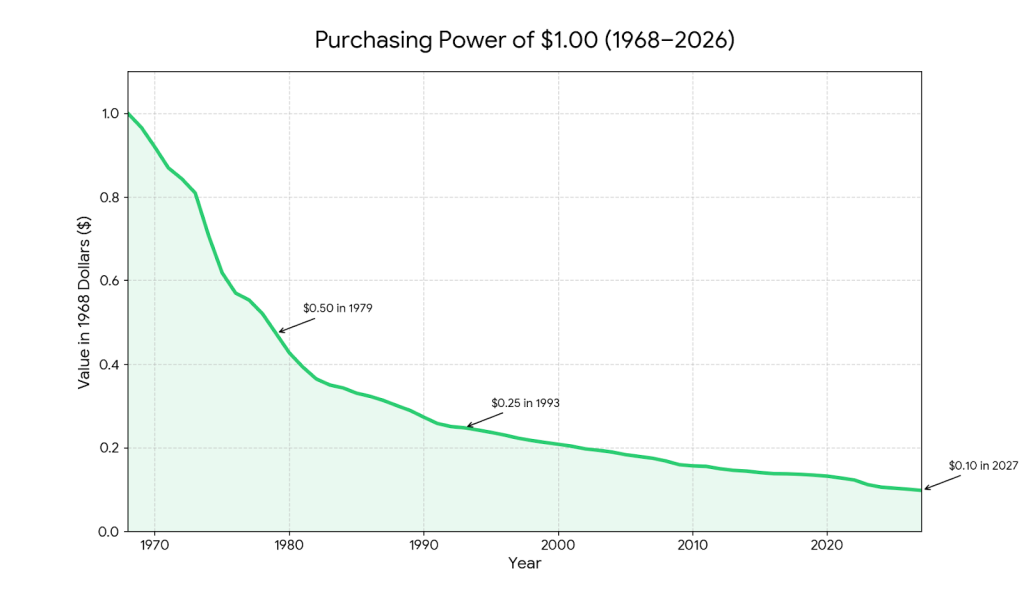
In 1968, a single dollar bill was a powerful tool at the supermarket. You could walk into a store and buy a substantial amount of bread, milk, and meat for just a few coins. However, as our data shows, that same dollar has been on a relentless downward slide for nearly six decades.
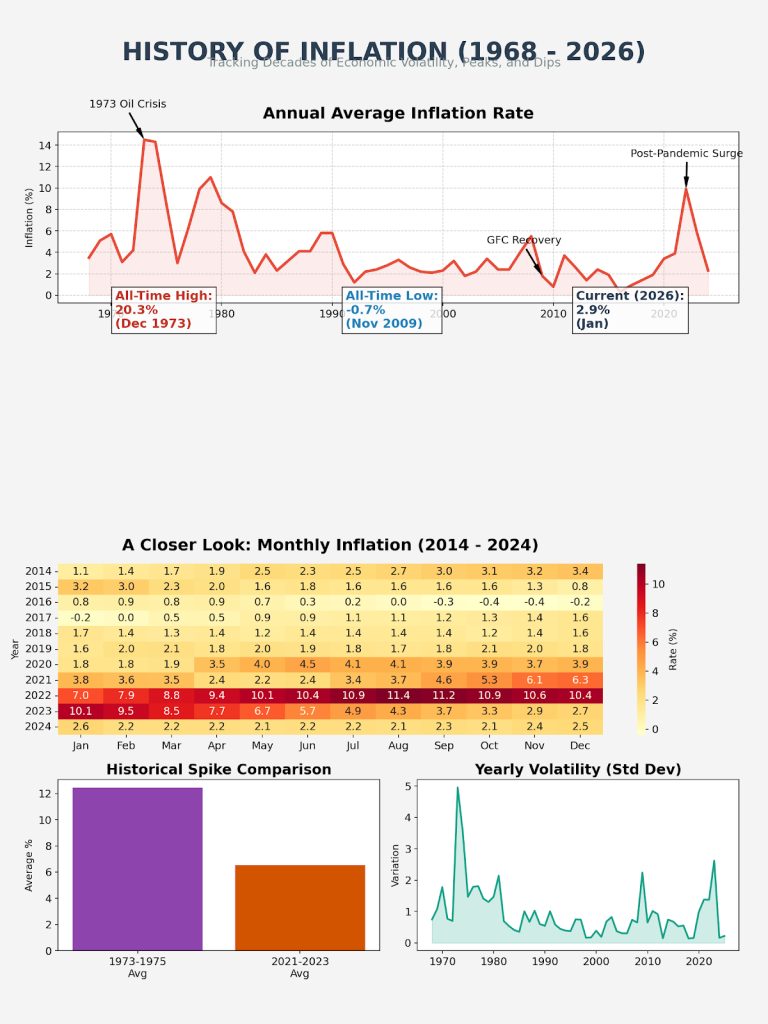
Through the high-inflation 1970s, the economic shifts of the 90s, and the recent post-pandemic surge, the “Food Dollar” has lost 90% of its value. Today, it takes roughly $10.00 to buy the same amount of groceries that $1.00 bought in 1968. While we have more dollars in our pockets, each individual dollar is working ten times less than it used to.
The “Scissors” Effect
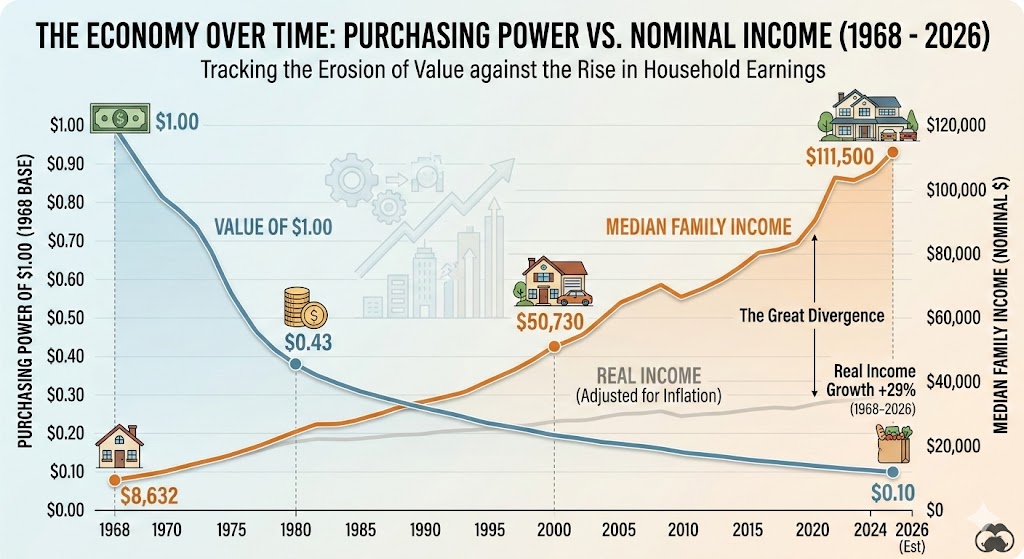
When we overlay household income onto this decline, we see a “scissors” chart. One line—the number of dollars we earn—shoots upward. The other line—what those dollars actually buy—descends toward the floor.
Economists call the income we see on our paychecks “Nominal Income.” It’s the number without the context. But “Real Income” is what actually matters for your quality of life. When we adjust today’s $111,500 average salary for the cost of food, we find a startling truth: the average family’s actual food-buying power has only increased by about 26% since 1968.
In 58 years of technological advancement, industrial growth, and career climbing, the average family has only gained a tiny bit of “food ground.”
Why the Grocery Store Feels Different
This data explains the “middle-class squeeze.” Between 2000 and 2010, for example, food prices actually outpaced wage growth. During that decade, families were technically making more money, but they were actually getting poorer in terms of what they could put on the dinner table.
While we are technically “richer” than our grandparents, our modern expenses are higher and our currency is weaker. The next time you wonder why a six-figure salary doesn’t feel like it used to, remember the “Food Dollar.” We are earning more than ever, but we are also chasing a finish line that moves faster every year.






Leave a Reply